 Florentis
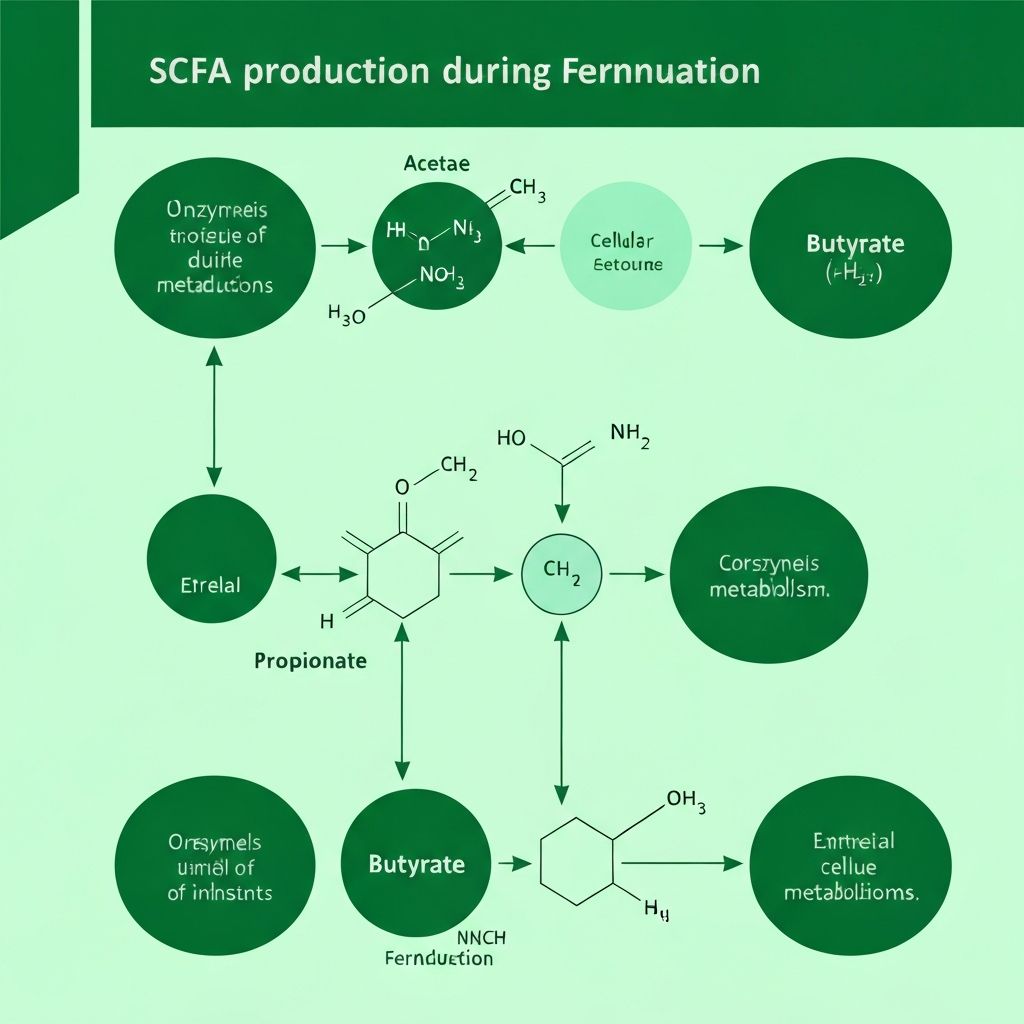
Short-Chain Fatty Acids and Their Metabolic Signalling Roles
Short-chain fatty acids (SCFA) are organic acids with fewer than six carbon atoms. In the human gastrointestinal tract, the primary SCFA produced through bacterial fermentation are acetate, propionate, and butyrate, constituting approximately 90–95% of faecal SCFA. These compounds emerge from bacterial metabolism of dietary fibres, resistant starches, and other fermentable substrates that escape small intestinal digestion.
SCFA Production and Bacterial Metabolism
SCFA are produced through anaerobic fermentation pathways catalysed by diverse bacterial species within the colonic microbiota. The molar ratio of SCFA varies by bacterial composition and dietary substrate availability. Acetate represents the predominant SCFA (~60% of total), followed by propionate (~20%) and butyrate (~20%), though these proportions fluctuate based on microbial community structure and fermentation substrate.

Specific bacterial taxa exhibit distinct metabolic capacities for SCFA production. Faecalibacterium prausnitzii, Roseburia spp., and Eubacterium spp. are recognised as prominent butyrate producers. Bifidobacterium and Bacteroides spp. are efficient propionate producers. The survival and proliferation of these taxa depend on available substrate—soluble fibres, resistant starches, and polyphenols selectively promote SCFA-producing bacteria, whilst diets low in plant substrates result in reduced SCFA production and altered community composition.
Absorption and Systemic Distribution
SCFA produced in the colon are absorbed through colonocyte epithelial cells via specific transporters (MCT1, SMCT1). Approximately 95% of colonic SCFA are absorbed, with butyrate preferentially utilised locally as a colonocyte fuel substrate, propionate and acetate being absorbed into portal blood for hepatic and peripheral metabolism. Systemic SCFA concentrations reflect dietary fibre intake, microbial community composition, and colonic fermentation rate.
Portal acetate concentrations typically range from 70–200 μM, with higher levels following high-fibre meals or in individuals with elevated SCFA-producing bacteria. Acetate serves as a lipogenic substrate in hepatic mitochondria and influences whole-body fatty acid metabolism and energy expenditure. Propionate enters gluconeogenic pathways in the liver, influencing blood glucose dynamics. Butyrate is primarily metabolised by colonocytes for energy but also exerts local and systemic epigenetic effects through histone deacetylase (HDAC) inhibition.
SCFA Signalling Mechanisms
Beyond their role as metabolic fuels, SCFA function as signalling molecules through activation of G-protein coupled receptors (GPCRs). The principal SCFA receptors include GPR41 and GPR43 (now termed FFAR3 and FFAR2), which are expressed on enteroendocrine cells, immune cells, and colonocytes. SCFA binding to these receptors triggers intracellular signalling cascades that modulate cell function and systemic metabolism.
Butyrate also functions as an epigenetic modifier through HDAC inhibition, increasing histone acetylation and altering gene expression in colonocytes and immune cells. This epigenetic mechanism contributes to improved intestinal barrier integrity, enhanced regulatory T cell differentiation, and reduced pro-inflammatory gene expression.
Appetite Regulation and Satiety Signalling
SCFA modulate appetite through multiple mechanisms. Enteroendocrine L-cells in the colon express SCFA receptors and respond to SCFA by releasing glucagon-like peptide-1 (GLP-1) and peptide YY (PYY), hormones that signal satiety to the hypothalamus. Rodent studies demonstrate that SCFA administration or increased SCFA production enhances GLP-1 and PYY secretion, suppressing food intake and promoting weight loss.
The vagal afferent pathway also contributes. Colonocyte and enteric neural cells express SCFA receptors and communicate microbial metabolite-derived signals to the brainstem nucleus tractus solitarius via the vagus nerve. This vagal signalling pathway influences hypothalamic appetite centres, potentially contributing to long-term energy balance regulation.
In individuals with dysbiotic microbiota or reduced SCFA production, attenuated satiety signalling may contribute to dysregulated energy intake and positive energy balance, though direct causal evidence in humans remains limited.
Metabolic Effects on Energy Harvest and Expenditure
SCFA influence both energy intake (through appetite signalling) and energy output. Butyrate, as a colonocyte fuel, reduces glucose-dependent energy requirements in the intestine, potentially decreasing postprandial thermogenesis. Conversely, acetate and propionate absorbed into portal blood increase hepatic glucose production and may influence peripheral glucose uptake, affecting blood glucose dynamics and insulin secretion.
Studies demonstrate that elevated SCFA-producing bacteria and increased faecal SCFA correlate with improved insulin sensitivity and reduced markers of metabolic dysfunction in some populations, though these associations are modest and inconsistently replicable.
SCFA and Intestinal Barrier Integrity
Butyrate strengthens intestinal barrier function by promoting tight junction protein expression and enhancing colonocyte metabolism, supporting epithelial integrity. This mechanism is hypothesised to reduce bacterial lipopolysaccharide (LPS) translocation and systemic endotoxemia, thereby decreasing chronic low-grade inflammation associated with metabolic dysfunction.
Research Gaps and Considerations
Whilst SCFA are established as metabolically significant compounds, key questions remain incompletely resolved. The relative contribution of SCFA signalling versus SCFA as fuel substrates to metabolic health remains unclear. Individual variation in SCFA receptor expression, intestinal transit time, and microbial composition create heterogeneity in SCFA-mediated effects across populations. Direct interventional evidence for SCFA supplementation or targeted SCFA-producing bacteria promotion in humans is limited.
Understanding SCFA physiology requires integration across multiple biological scales—from bacterial enzyme kinetics to host hormone signalling to whole-organism energy balance—a complexity that continues to challenge mechanistic investigation.